A veterinary cardiologist reveals what nobody tells you when the vet says “nothing to do for now” — and the one thing you can do for his heart before his next check-up
A murmur at a routine booster and six months to wait left a veterinary cardiologist watching her own dog that night. The thirty-second morning habit she began at home, alongside her vet, put him out in front, racing to the bowl, spark back.

It was supposed to be a ten-minute booster.
Treat in the car. In and out. Home before the kettle boiled.
Then the vet went quiet with the stethoscope.
You know that silence. The chat stops. She isn’t making the usual noises. The metal moves to another spot on his chest. She listens again. She moves it. She listens a third time.
Your stomach drops before she has said a word.
Then she says it. A murmur. Grade two. Nothing to do for now. We’ll recheck in six months.
She is kind. She is clear. She hands you a leaflet that weighs nothing and weighs a ton, and you walk back to the car with a dog who has no idea anything is wrong. He wags. He does the spin for the lead. He looks exactly like himself.
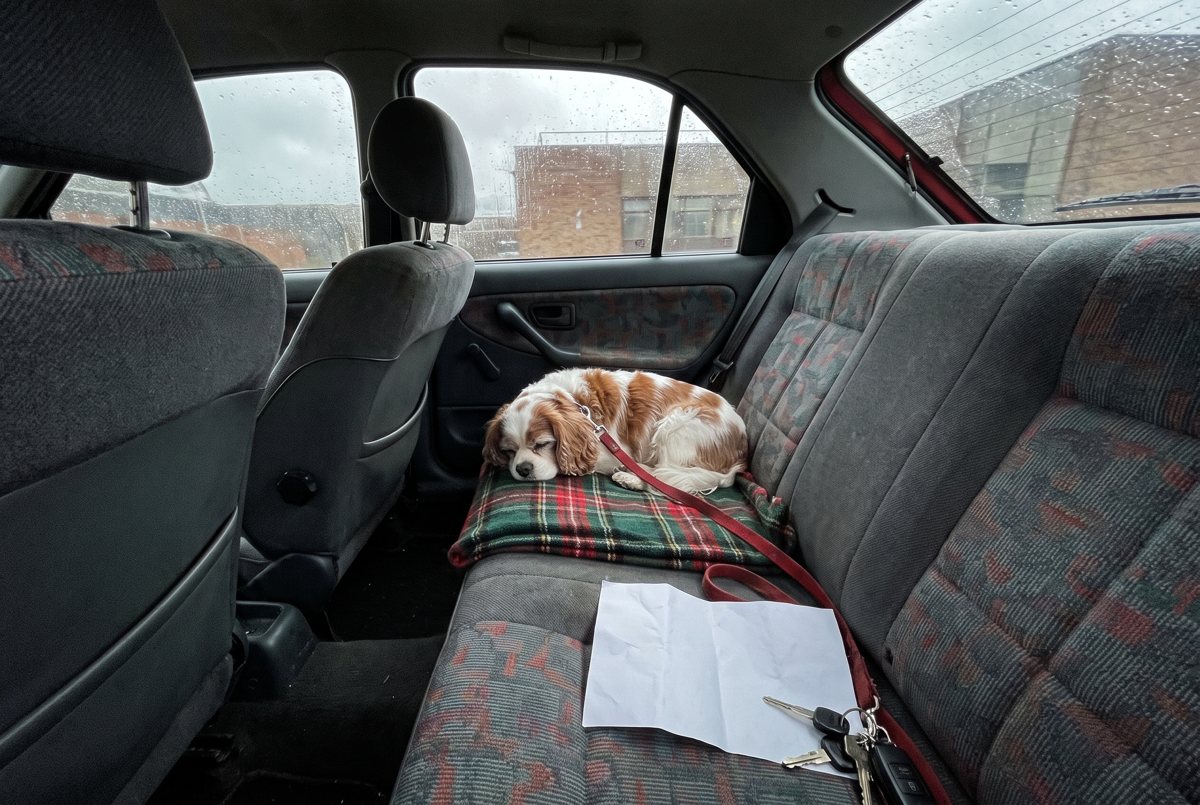
You know that drive. You’ve done it. Grey afternoon, him out cold behind you, lead still on, and you crying at the lights while he hasn’t a clue.
Since then you’ve learned his resting breathing rate by heart. You’ve muted the telly. You’ve set a 60-second timer on your phone and watched his ribs in the dark, counting, holding your own breath when he coughs at half one in the morning.
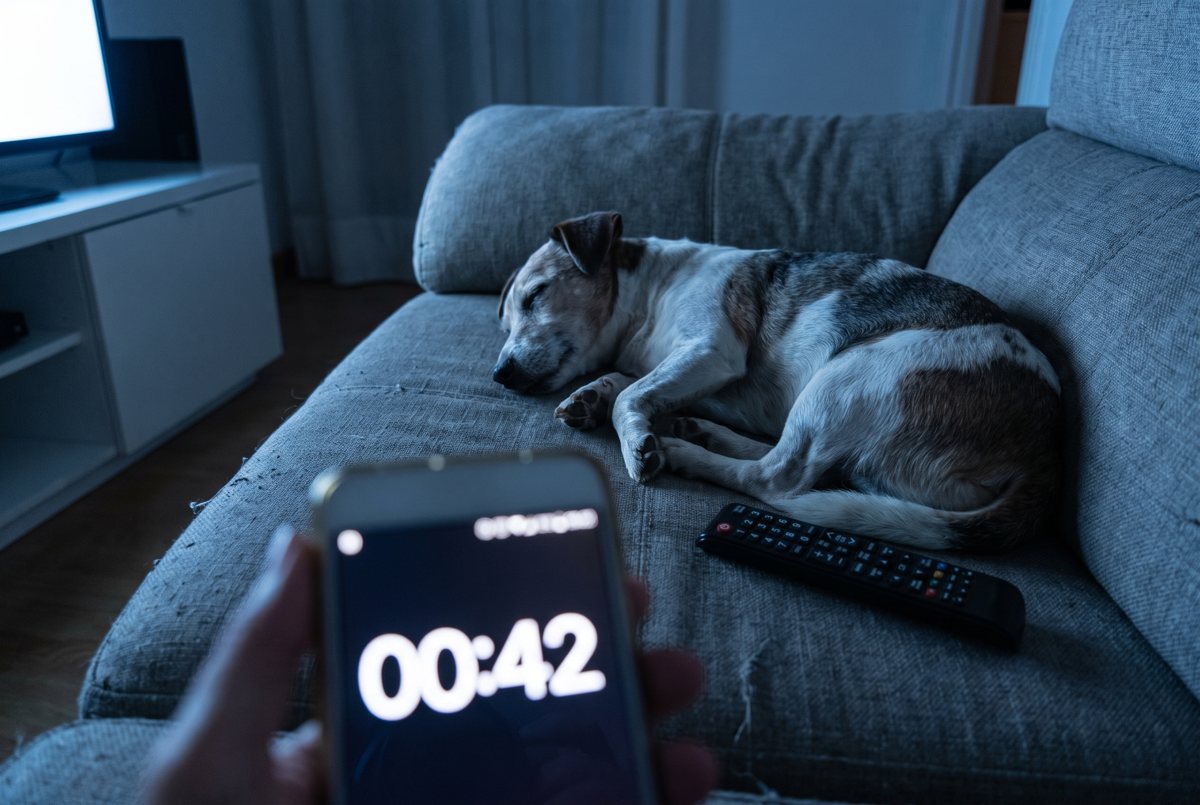
You’ve not booked the holiday. You’ve started looking back on the walk and waiting for him. You’ve opened the insurance renewal and seen “heart conditions” sitting there as excluded. To everyone else in the house he is the same dog. You are the one who knows.
I know that drive. I know that sofa. I know that stopwatch.
What I haven’t told you yet is my job.
I am a veterinary cardiologist. And for twenty years, I have been the one saying those words.
“Nothing to do for now. We’ll recheck in six months.” I have said it to owner after owner, because for an early murmur it is the correct protocol. I have sent them home with a leaflet and nothing in their hands. Hundreds of times. Then I heard the words about my own dog.
His name is Archie. Golden English Cocker Spaniel. About seven when it started. A colleague did his booster. The colleague went quiet with the stethoscope. A murmur. I scanned him myself that evening, on my own table: early, heart not enlarged — textbook “nothing to do for now, recheck in six months”.
The words I had said a thousand times.
That night I sat on my sofa with my phone stopwatch counting his breaths. A cardiologist. As helpless as every owner I had ever sent home with a leaflet.
And before you close this page and pull him closer, I owe you the sentence I needed that night — the one I now say to every owner who sits opposite me:
It’s not your fault. Nobody gave you anything to do.
But I also owe you the part that sits in the stomach — and I would rather say it to your face, as I would in my consult room.
While you wait, the muscle doing all the work beats around 100,000 times a day. Every day. For six months. Running on whatever his own body happens to make. And nobody checks how much that is.
It moves in silence. The heart compensates quietly — months, sometimes years — while he still greets you at the door and still steals the sofa. When you can see it, the muscle has been working hard for a long time.
That is why this page exists. Not to punish you for a wait you were handed.
So that nobody can ever again tell you there is nothing to do.
Someone knew there was a gap. And that is where this story becomes an investigation.
I should warn you of one thing: from here on, as well as a cardiologist, you’ll be reading an angry woman. By the end, I think you will be too.
Why this may be happening in your home — right now
Before I tell you the rest of my story, we stop for a moment on yours.
Three things make this different from everything else you’ve read about his health. Three. And all three play against you.
One. It hits the dogs who “seem totally fine.” The murmur found by surprise at a booster, a dental, a neutering. No cough. No collapse. “No symptoms, completely incidental finding.” He chased the ball that morning. He wagged all the way home. One owner wrote it exactly: “Is a stage 3 heart murmur life threatening, he seems totally fine in himself?”
The fact that he seems fine is exactly what stops you from doing anything.
Two. Nobody is watching. Nobody. The check-up listens and measures — then sends you home. The routine blood test does not measure the one thing his heart muscle runs on. Dog-food rules do not require it. Once the murmur is on file, insurers exclude the heart. The stethoscope can sound almost normal while the muscle compensates.
You find that normal? Neither do I.
The only safety net is you. And until today, nobody gave you anything to hold.
Three. When you can see it, it’s late. He “slows down”. “He’s getting on a bit.” “He’s just a very old dog.” One owner wrote, after it was too late: “my last dog ‘slowed down’ and I simply accepted it as aging but she was really unwell & I didn’t realize.” Another: “He tries to keep up, no matter what.”
In the owner communities, you read the stories you don’t forget. Dogs who seemed fine on Monday. The first sign you can see is rarely the first day of the work.
That’s what I wish someone had printed on that leaflet they handed you in the car park.
Now I can tell you the rest.
The diagnosis I give other people’s dogs

Archie had no signs at all. That’s the point. He still stole socks. He still led the walk. If you had asked me that morning, I would have told you he was fine.
Do the test now, for your dog. Honestly:
- Has a vet ever gone quiet with the stethoscope and listened twice?
- Does he walk behind you now, where he used to lead?
- Is there a cough — at night, when he gets up, the one that ends in a gag?
- Has he simply “got old” — sleeping more, stopping on the stairs, walking past his bowl?
If you just said yes to one of them, this concerns you tonight — not some day.
And if you said no to all four: that’s exactly what I would have answered for Archie the morning of his booster.
I did what I do every day for other people’s dogs. I put him on my own echo table.
Early murmur. Heart not enlarged. The textbook answer. The words I had said a thousand times: nothing to do for now.
I didn’t sleep. Not only because of the finding.
Because of a question I could not shake: “Am I really just going to sit here and wait?”
Thousands of owners had asked it before me, word for word. One wrote: “Went from ‘lucky to have caught it early’ to ‘nothing to do for now’ Any advice would help. I feel helpless sad and lost.” Another: “they’ve said there is nothing else to do other than watch and wait.” Another, at an hour nobody should still be awake: “I am sitting watching her worrying she will die any second.”
And the one that still sits in my chest: “Is there anything else can do? I feel I’m letting my best friend down.”

The numbers nobody shows you at the check-up
Here is what does not get written on that leaflet. Not because your vet is hiding it. Because the system measures everything except this.
The numbers nobody shows you at the check-up
Read the first card again. Twenty-five million beats. And the gauge nobody looks at.
The information exists. Published. Peer-reviewed. Discussed at cardiology congresses. I have sat in those rooms. I have nodded along.
The one thing it never did was reach you, in that consult room, with the leaflet in your hand.
I’ll be precise, because precision is what separates a report from an advert: your vet is not the problem. I have been that vet. For an early murmur, “nothing to do for now” is the protocol. Recheck in six to twelve months. No tablets yet. Watch and wait.
The protocol looks after the murmur. It does not look after the months.
You don’t find that incredible? I still do. Every time I say those words, and watch an owner walk out with nothing to do.
A product for every worry. For his heart — nothing.
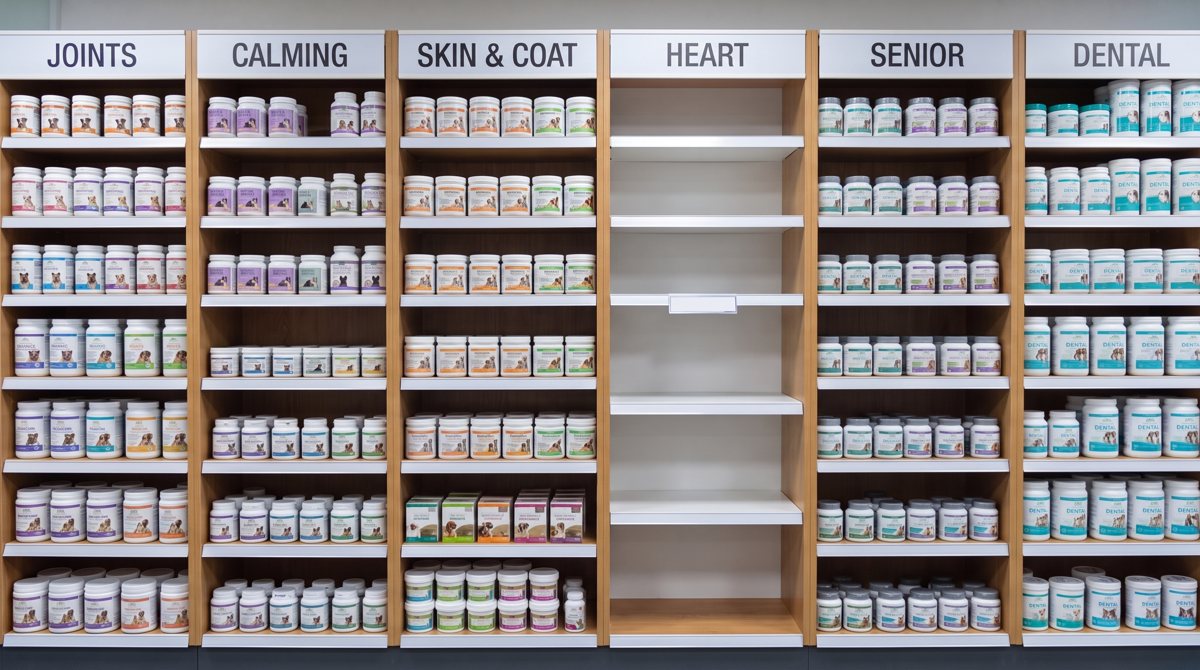
Take a second. Picture the aisle.
Joints. Calming. Skin & coat. Digestion. Senior. Dental. A tub for every worry that keeps you awake. A shelf for every part of him you can see.
And the organ that keeps him alive? Nothing.
Tell me that isn’t outrageous.
The place the heart IS taken seriously is behind the clinic counter — the cardiac diets vets prescribe after diagnosis. A French veterinary-school thesis analysed them one by one.
All seven were deliberately enriched with the very nutrient this report is about. All seven. No exceptions.
Read that again. The same world that fills the aisle with joint chews adds this nutrient on purpose — when the heart is already failing.
You don’t find that incredible?
I have twenty-odd years in this job. I have learned to talk calmly about nearly everything. Not this.
An owner in Ireland wrote it without dressing it up: her vet, when she mentioned milk thistle for his liver, or the things she’d read for his heart, was “dead against it” — and then “the cardiologist thinks they are a good idea.”
So the question I asked for Archie, ask it for yours: if it matters enough to be added to the diets of dogs whose hearts are already failing… why is nobody looking after his — now, in the months between check-ups?
“The Six-Month Gap” — what happens between his check-ups
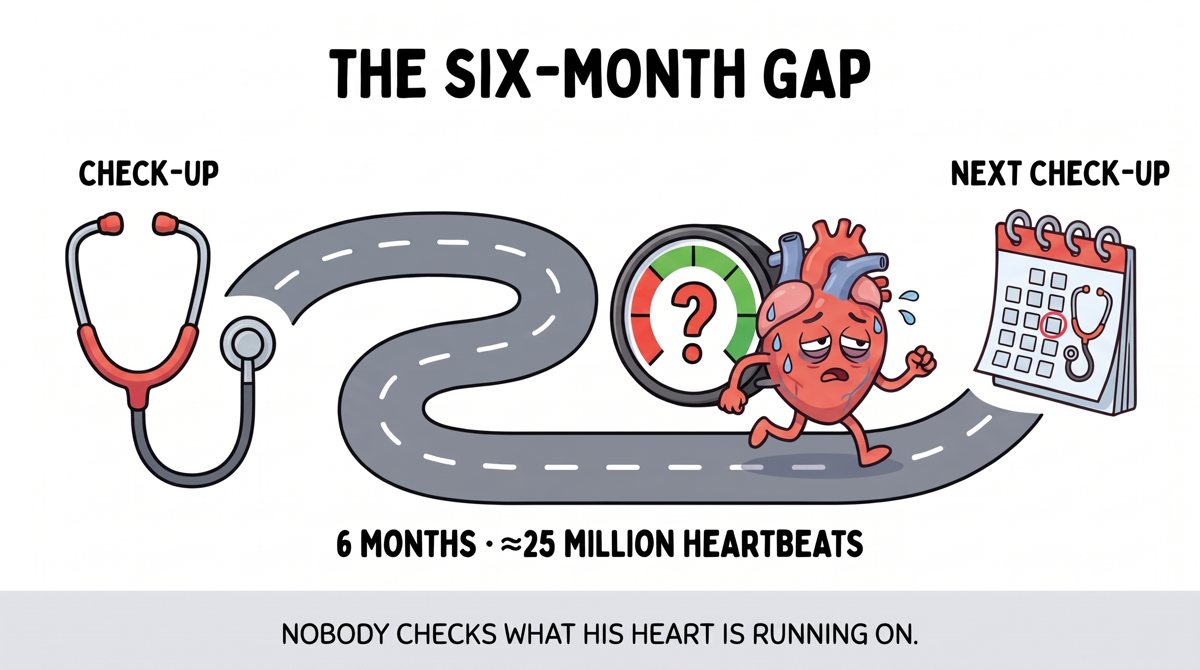
Here is the part nobody mentions at the check-up.
Your dog’s heart muscle runs on taurine. It is one of the most concentrated nutrients in heart muscle. It is involved in every beat — in the way the muscle handles calcium, contraction after contraction (Schaffer et al., 2010, Journal of Biomedical Science).
Dogs don’t get it ready-made. They make their own, from two amino acids in the protein of their food. That is why dog-food rules don’t require it. That is why it isn’t on a standard blood test.
Here is the clever objection informed owners always ask — perhaps you’ve already asked it yourself:
“Dogs make their own taurine. So how could mine be short of it?”
The answer is two sentences, and it is the key to this entire report:
It isn’t what his body could make. It’s what his heart actually has — every beat, for six months.
The home-made supply is not the same in every dog. Three things change it:
- 1. Size and breed. Bigger dogs make less per kilo than small ones on the same food. Newfoundlands make about half what a Beagle makes on the same diet. Cockers and goldens have been studied with low levels — in dogs who looked well.
- 2. Age. In the Swedish cocker study, and in the Newfoundland study, the dogs with low taurine were older. The “he’s just getting on a bit” years are exactly when the factory may be making less.
- 3. Food. Fibre, the kind of protein, home cooking — the “complete” label does not guarantee what his muscle actually holds. One line, because this is not a lecture about his kibble. It is about the months.
Three reasons the supply varies. None of them visible on the walk. None of them on the bloods. On paper, he eats “complete” food — while the muscle that beats 100,000 times a day works, perhaps, on whatever his own body happens to make that week.
That is The Six-Month Gap. The months between one check-up and the next, when the muscle doing all the work runs on a gauge nobody reads. The stethoscope comes back in six months. The fuel is not checked in between.
“Perhaps”, because I owe you precision. Nobody can tell you, tonight, what his heart is running on. That is the whole point: nobody checks.
Now let me show you what happens when a heart muscle that’s short gets it back. Because that is documented — and it is the part of this report that changed how I sit with owners.
What the studies show when taurine is given back
I am going to give you four published results. Not slogans. Publications, checkable, with their sources. This is the file I now show colleagues:
The evidence — dogs who were short, taurine given back
And behind the papers, the owners. The line that travels furthest in the communities is not a clinic write-up. It is a dog owner’s comment on TikTok, about taurine powder, written the way people actually write when they are still in it:
“Put her straight onto taurine powder which when she went back to the vets for her check up after a year he said she is no better but no worse. The vet only gave her 6-12 months to live that is 2yrs ago next month.”
I have to be precise, because that is what separates this report from anyone selling you a miracle: these results are in dogs who were short, in complete protocols, with vet follow-up. Nobody can promise you the same for your dog — and I will say it again: run from anyone who does.
But here is what those publications establish, and what nobody can take away from you: when the muscle is short and gets it back, documented hearts started working again. That is why the clinic diets are enriched. That is why cardiologists — including me — stopped treating the bowl as an afterthought.
One question remained: how to give it. That’s where everything got complicated… until recently.
“The Daily Heart Top-Up” — why I agreed to write this
After Archie’s scan I did what every owner does. I searched.
Change his food? He went on hunger strike. And I was not going to take away a food he loves to make myself feel busy. Human taurine? Doses made for people. Capsules to split, crush, hide. One owner put the whole mess in a sentence: they don’t sell it here for dogs, just small doses for cats. The pill in the ham. The cheese trick that worked last month and doesn’t now.
Nothing made for a dog, by his weight, that I could put on a breakfast he already wanted to eat.
When the team at Vitalys contacted me, I said no. Then I asked for the spec sheet. And I found, point by point, what I had not found for Archie:
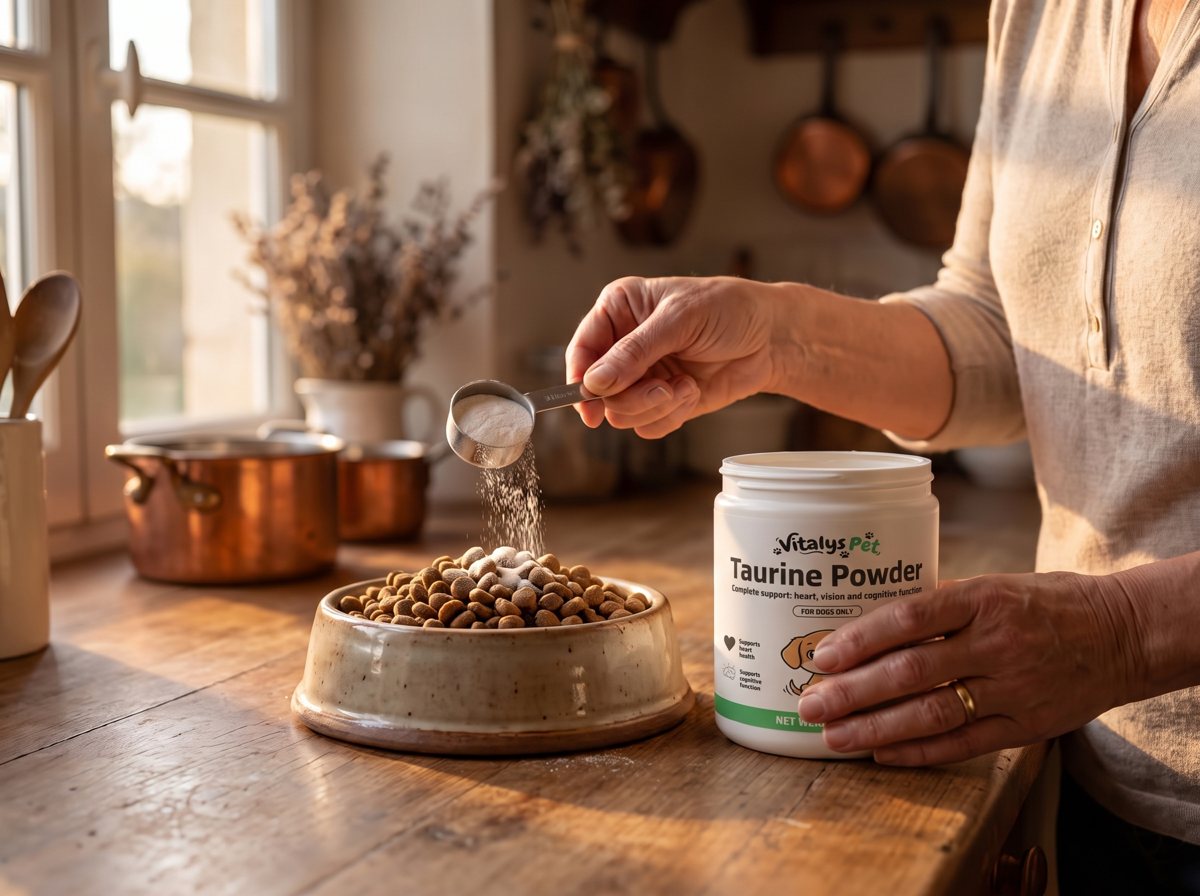
Pure taurine, straight into his bowl. One ingredient. ≥ 99.9%. No grains, no artificial colours or flavourings, no preservatives. Nothing to change in his food — his food stays his food. Complementary feed for dogs; not a medicine. The nutrient arrives beside the breakfast he already likes.
The dose for HIS weight, printed on the jar. With its own dosing spoon. No tablets cut in half. No maths at 2 a.m. If he’s fussy, half the dose for the first 3–7 days. You follow the table on the label — not a guess.
No taste, no smell. A scoop on his breakfast, thirty seconds. Archie — the hunger-strike artist — never noticed a thing. No pill to hide in cheese. No new food for him to refuse. Your dog won’t notice a thing.
Alongside whatever your vet prescribes — nothing to stop or change. It replaces NOTHING. Water-soluble: any excess leaves in his urine. Show the label to your vet: one ingredient, dose declared — a fifteen-second conversation. I’m not anti-vet or anti-medication. Neither is this jar.
An owner put it better than every colleague I have, and it became my answer to the ones who hesitate:
“Will it help him? Yes — you’ll watch him race to the bowl and take the lead again. Can it hurt him? No.”
Check availability →90-day money-back guarantee · even if the jar’s emptyAnd Archie?

Archie is followed. Rechecked every six months on my own table — the vet first, always. A colleague reads the scans with me. I am still his cardiologist. That part does not change.
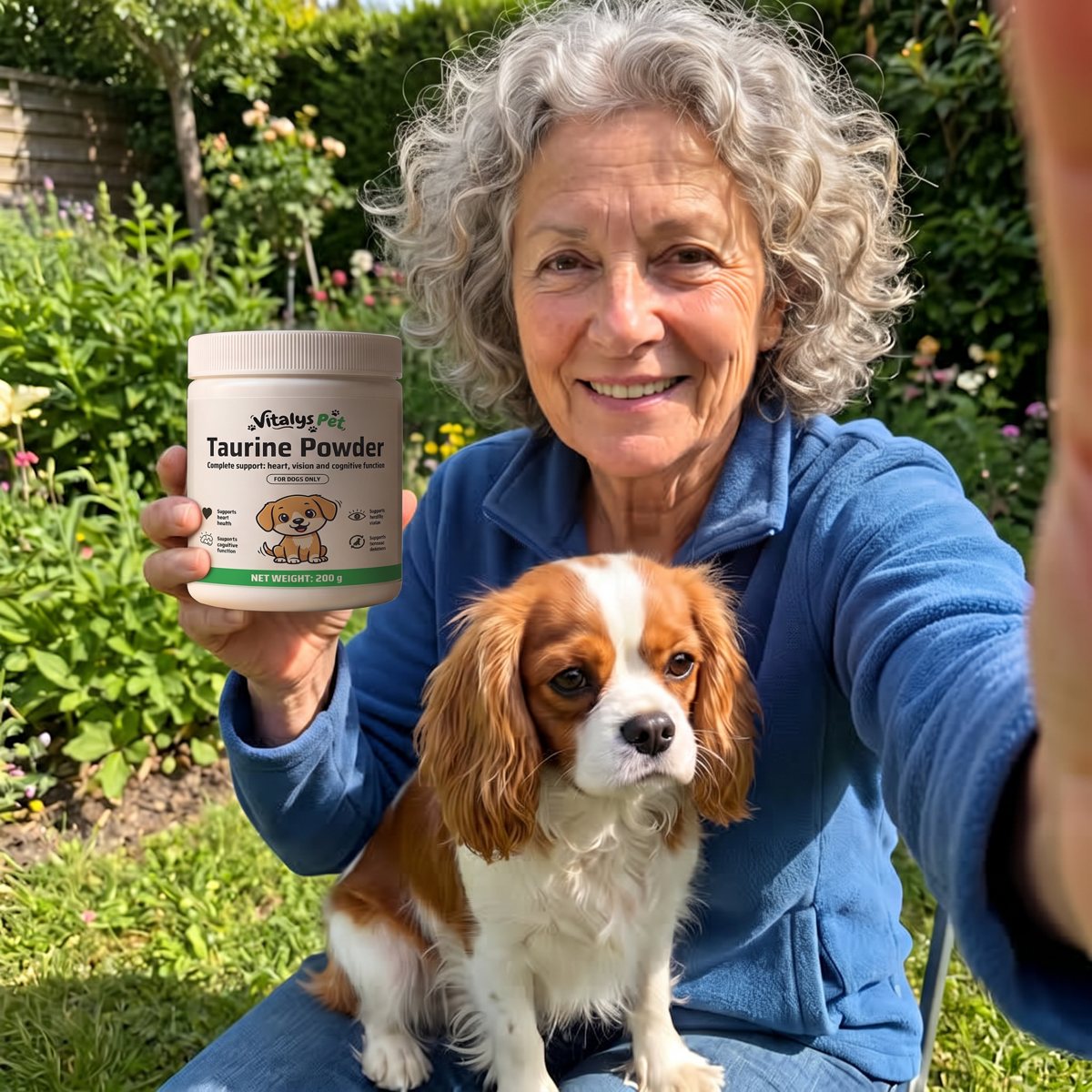
And every morning, for two years, his breakfast gets The Daily Heart Top-Up. His food is the food he loves. His notes are kept.
Then one morning he was out in front again, pulling towards the park. He did the happy spin at the door and raced to his bowl. He brought the ball back until I was the one who stopped, and he took the stairs two at a time.
At the last recheck my colleague looked up from the scan and smiled. I sleep through the night. I would never go back to the sofa, the stopwatch, and a dog without his spark.
Watch him race to the bowl. Watch him take the lead. That is the morning I refuse to give up.
His heart can look perfect. That’s exactly the problem.
Perhaps your dog still runs, still plays, still “seems totally fine in himself” — and a small voice is telling you this page is not about you.
Then one last thing, from a cardiologist to an owner: this is famous among us for how well it can hide. The heart compensates in silence for months, sometimes years. When the signs arrive — the walk he no longer leads, the cough that ends in a gag, three throws of the ball instead of twenty — the muscle has already been working hard for a long time.
Cavaliers. Small terriers. Chihuahuas, Yorkshires, Shih Tzus, Jack Russells, the cross-breeds on every sofa. Cockers. Goldens. And any dog who is “getting on a bit.”
Tonight you choose: his old self, out in front on the walk, the spark back, and a check-up you walk into with your head up — or another six months of hoping the silence holds.
They stopped just waiting
Let’s do the maths (because nobody else does)
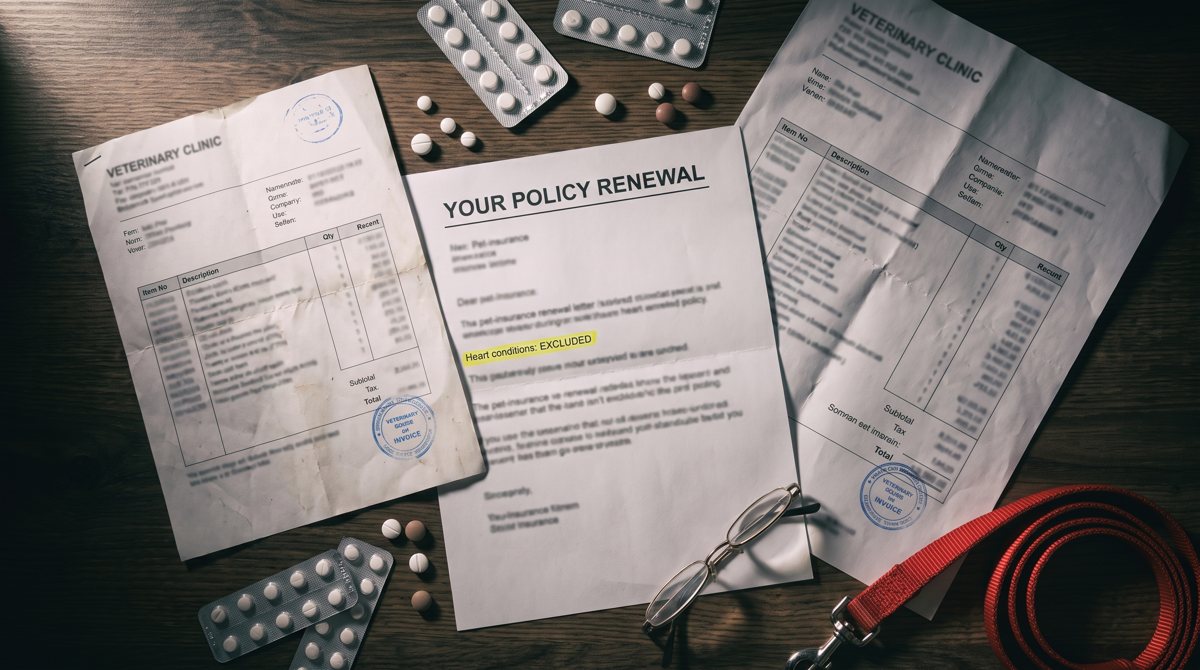
Nobody ever lays this list in front of you. It makes me angry every time I have to do it in a consult room — always too late. Here it is. Not in figures. In the things you already recognise.
What a heart that tips over actually costs, in kind:
- The referral to the cardiologist — and the scan they want to repeat
- The day it tips over: X-ray, scan and bloods all at once, and the figure they read out at the desk
- Heart tablets for life, when the time comes — essential, and nobody asks if you can afford it
- The emergency at 2 a.m. because his breathing looked wrong
- The insurance that won’t touch his heart again. One owner: “my dog’s insurance covers nothing related to her heart now.” Another: “so unless you know there is an alternative they have you over a barrel.”
- And the nights counting breaths, the guilt, the “I should have done something sooner”: not billed. The most expensive on the list.
The daily top-up: around €0,52 a day. Less than a coffee. So that “is there anything I can do?” finally has an answer.
The offer and the guarantee (the only one on that aisle)
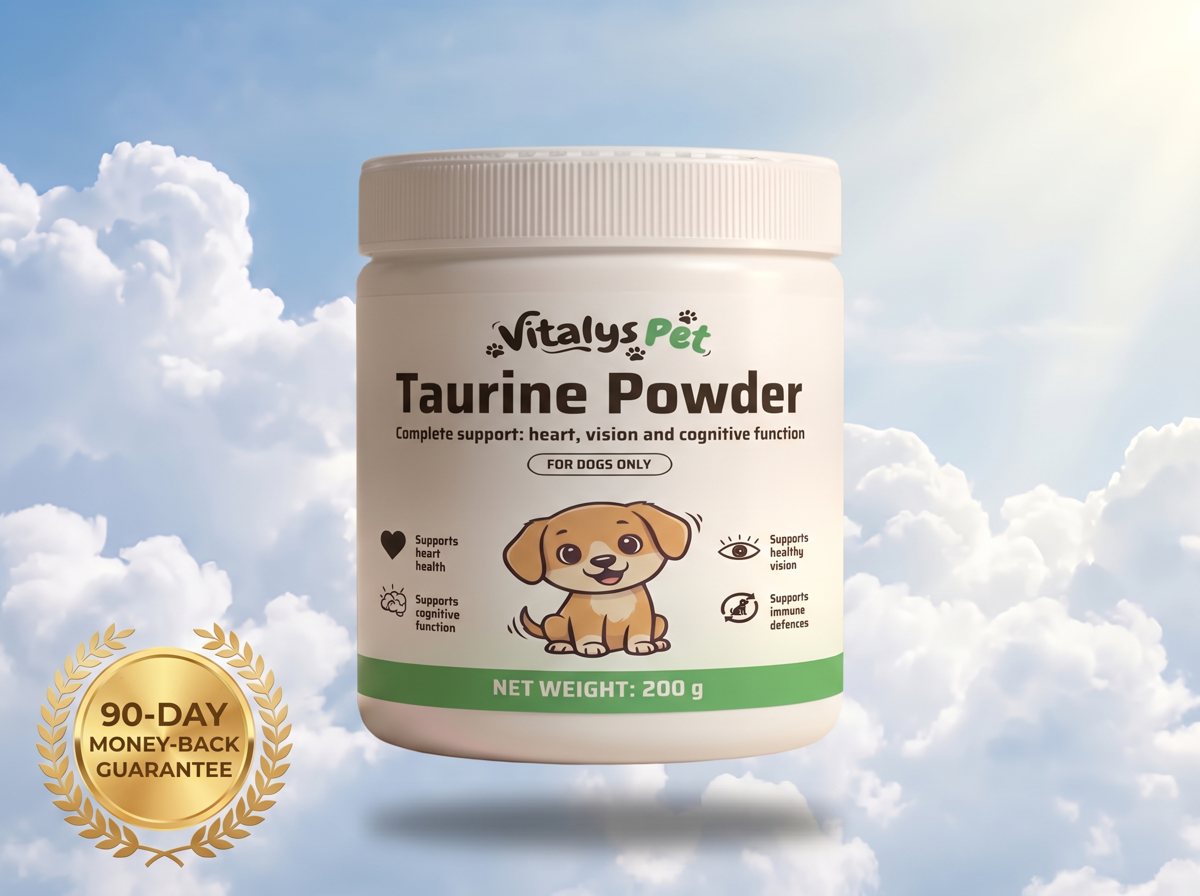
Each plan is a subscription, delivered automatically and timed to his daily dose, so he never goes without and each delivery lands just as the last jar runs out. Free delivery. No commitment. Pause, change or cancel online anytime — no phone call, no fees. Prices shown in your own currency.
And here is the part that, in twenty-odd years, I had never seen on that aisle:
90 days, or every penny back — even if the jar’s empty.
Try the habit for three months. If he won’t eat it, if it doesn’t settle into your morning, if you don’t feel it’s helping by his next check-up — one email, refunded. Empty jar included. Fewer than 1% of our customers ever use the guarantee.
No other brand on that aisle dares it at 90 days. None. When a product can do that, it knows its return rate.
So my offer is one sentence: order the jar, put the first scoop on his breakfast tomorrow morning, and let the guarantee carry the risk for you.
Free gifts with the first delivery: the dosing spoon, always. The Canine Longevity Guide from 2 jars. Free priority delivery from 3. Dispatched within 24 hours, tracked, usually with you in 5–7 working days, to the UK, Ireland, Australia, New Zealand and Canada. Secure checkout.
Check availability →90-day money-back guarantee · even if the jar’s emptyThe two paths

Concretely, tonight
- Count his breaths while he sleeps (30 seconds × 2 — under about 30 a minute at rest), and write it down. Free, and the best early-warning system there is.
- Check availability of the jar below — his plan by his weight.
- Tomorrow morning, the first scoop on his breakfast. No taste, no smell. Thirty seconds.
- Keep every check-up. Take the label to your vet — one ingredient, dose by weight. If they prescribe anything, you follow it: the top-up is added, never instead.
- By weeks 3–4, watch for the bounce: more energy on the walk, racing to the bowl, playing again. At his next check-up, walk in with your head up.
One last thing, from a cardiologist to an owner — and I will say it without wrapping it.
If your dog has never had a murmur, his check-ups are perfect and he’s still out in front on the walk, you do not need any of this. Close the page with a clear conscience.
But if the vet has already said “nothing to do for now”… you know how the waiting goes when nothing changes. If you put the scoop on his breakfast tomorrow, you know what you get: by weeks 3 to 4, more bounce on the walk, the race to the bowl, the spark back — and a check-up you walk into with your head up. One scoop, tomorrow morning, thirty seconds.
Dr Imogen Hale
Veterinary cardiologist, and Archie’s owner
P.S. — Archie’s last recheck: my colleague looked up from the scan and smiled. “Whatever you’re doing, keep doing it.” Leaving the clinic he pulled on his lead all the way to the park, and I had to be the one who said stop. In the car park a lady asked how old my “young dog” was. Nine. A heart that’s watched, a bowl that never misses, and nine.
P.P.S. — If you keep one thing from this report, keep the breathing count. Once a week. Written down. Thirty seconds times two, while he sleeps. Under about 30 a minute at rest. It costs nothing, and it is the best warning system I can give you that isn’t a consult room.
P.P.P.S. — To colleagues: the references are in the text — MUST/Kittleson 1997, Kaplan 2018 (PLOS ONE), Fascetti 2003, Backus 2006, Kriström 2024 (CURE), Schaffer 2010, FEDIAF. Check them. That’s what they’re for.
P.P.P.P.S. — Mistake no. 1: stopping after six weeks “because he’s fine”. The Six-Month Gap doesn’t take holidays. The top-up only makes sense every day — that’s why the 3-jar plan exists, and why each jar costs €9,30 less on it.
💬 Comments


The report that has owners in the UK, Ireland, Australia, New Zealand and Canada doing something between check-ups
After “nothing to do for now” and six months of counting breaths, a veterinary cardiologist names the gap nobody fills between check-ups — and a single-ingredient daily top-up, dosed by his weight, takes its place on breakfast. Alongside the vet. Never instead.